What Are the Best Neighborhoods in Queens? (2026)
While Astoria, Long Island City, Forest Hills, and Sunnyside are frequent top options because they combine strong transit access, livable housing, and everyday amenities, there is no single best neighborhood in Queens. The best choice depends on factors like commute, housing, and lifestyle.
Queens neighborhoods vary widely in density, character, and location. Some offer quick access to Manhattan, while others offer more space and a quieter residential feel. Because of this range, finding the right neighborhood is less about rankings and more about matching your priorities to the character of a specific area.
Below, we break down the best neighborhoods in Queens by common needs, so you can focus on the areas most likely to fit how you live.
How Do You Choose the Best Neighborhood When Moving to Queens?
When you are moving to Queens, choosing the right neighborhood starts with understanding what matters most to you. Queens is a large borough, and neighborhoods can feel very different from one another.
Commute and location are often the first filter. Neighborhoods closer to Manhattan or major transit lines tend to be denser, while areas farther east usually trade longer travel times for more space.
There is no single best neighborhood in Queens. Some neighborhoods are dominated by apartment buildings, while others have more single-family homes or low-rise housing, which affects space, noise, and overall cost.
Finally, daily lifestyle matters. Walkability, access to shops and restaurants, and the general pace of the neighborhood can shape how an area feels once you live there.
Understanding how these factors line up with your priorities makes it much easier to identify which Queens neighborhoods are likely to be a good fit.
What Are the Best Neighborhoods in Queens for Families?
The best neighborhoods in Queens for families are often places that combine larger housing, access to parks, and established school and childcare options. Based on housing stock, neighborhood layout, and proximity to public schools and early-childhood programs, Forest Hills, Bayside, and Kew Gardens stand out as strong options for many families.
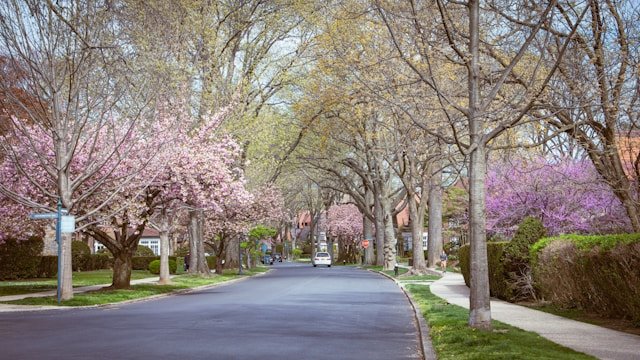
Forest Hills, Queens, NY
Forest Hills
Forest Hills has a wide range of housing, including larger apartments, co-ops, and single-family homes. Many buildings are older, with bigger floor plans than newer developments. The neighborhood is next to Forest Park and has a well-established residential feel, with schools and childcare options spread throughout the area.
Bayside
Bayside is made up mostly of single-family homes and quieter residential streets. Homes are typically larger, and the neighborhood feels more spread out than much of Queens. Bayside also has access to waterfront parks and a strong presence of local schools and childcare providers.
Kew Gardens
Kew Gardens includes many older apartment buildings with larger layouts, along with smaller residential homes. The neighborhood offers access to Forest Park and has a quieter pace than nearby commercial areas, while still being close to schools and childcare options in central Queens.
How to research housing, schools, and childcare:
Families comparing neighborhoods often review price-per-square-foot trends and housing stock on platforms like StreetEasy and Redfin, check public school locations and zoning using the NYC Department of Education School Search, and look up licensed childcare providers through NYC Child Care Connect. These tools make it easier to compare options at the neighborhood level as needs change.
What Are the Best Neighborhoods in Queens for Young Professionals?
The best neighborhoods in Queens for young professionals are usually places with good transit access, a high number of apartments, and active commercial areas. Based on housing patterns, density, and day-to-day activity, Long Island City, Astoria, and Ridgewood stand out as strong options.
These neighborhoods have a larger share of rental housing, more walkable streets, and clusters of restaurants, bars, and shops. They also tend to attract smaller households and people who prioritize convenience and access over space.
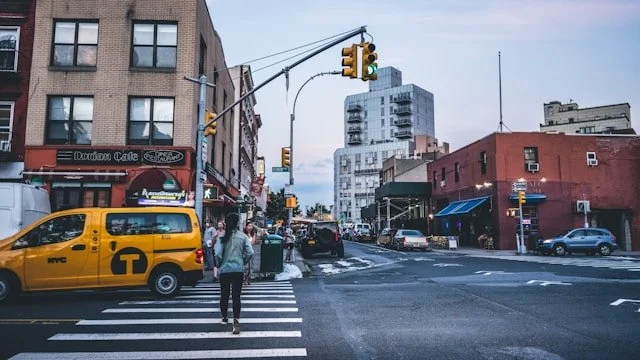
Long Island City, Queens
Long Island City
Long Island City has one of the highest concentrations of new rental buildings in Queens. Pricing per square foot is higher than most other Queens neighborhoods, but units tend to be newer and closer to Manhattan job centers. Waterfront parks, offices, and nightlife are close by, making it appealing for people who want to live near work and social spots.
Astoria
Astoria offers a different value proposition. While many buildings are older and lower-rise, rental prices per square foot are often lower than in Long Island City, according to StreetEasy and Zillow data. The neighborhood is known for its dense mix of restaurants, cafes, and nightlife, along with a strong sense of local identity, making it attractive to people who want an active neighborhood without luxury-building pricing.
Ridgewood
Ridgewood is frequently mentioned as a more affordable alternative to nearby Brooklyn neighborhoods, though rents are on the rise. Housing stock includes many small apartment buildings and multi-family homes, and pricing per square foot is typically lower than western Queens, based on Redfin and StreetEasy listings. The area has seen steady growth in bars, restaurants, and creative spaces, contributing to its popularity among younger renters.
Where Can You Find More Space and Value in Queens?
You can find more space and better value in Queens by looking in neighborhoods with lower housing density and more single-family homes or older apartment buildings. Areas like Flushing, Glendale, and the Rockaways tend to offer larger apartments or houses at a lower price per square foot than neighborhoods closer to Manhattan, according to housing data from StreetEasy, Zillow, and Redfin.
Flushing
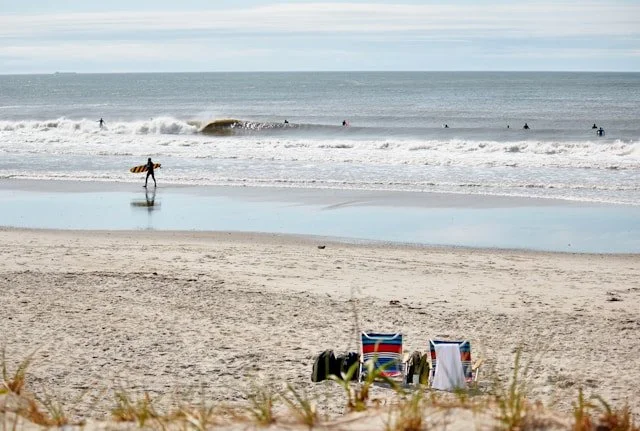
Rockaway Beach, Queens
Flushing has a wide mix of housing, including single-family homes, small apartment buildings, and newer developments. Prices per square foot are often lower than in western Queens, and larger units are more common. The neighborhood also has a major commercial center, which makes it one of the more self-contained areas in Queens.
Glendale
Glendale is a low-density, residential neighborhood with many single-family and semi-detached homes. Housing prices tend to be lower per square foot than in transit-heavy neighborhoods, and homes are typically larger. The area feels quieter and more suburban than much of western Queens.
The Rockaways
The Rockaways offer some of the most space for the cost in Queens. Housing includes single-family homes, duplexes, and larger apartments, often at lower prices per square foot than most of the borough. The tradeoff is distance from Manhattan, but for people prioritizing space, this area offers options that are difficult to find elsewhere in the city, like beach access.
Frequently asked questions about moving to Queens
Which Neighborhoods in Queens Are Closest to Manhattan?
Neighborhoods in western Queens are the closest to Manhattan and usually have the shortest subway rides. Long Island City, Astoria, and Sunnyside are just across the river and are one to a few subway stops from Midtown. Other neighborhoods, including Woodside and Jackson Heights, are a bit farther east but still offer fast trips to Manhattan because they are served by express subway lines.
Is Queens a Good Place to Live?
Queens can be a good place to live, but it depends on the neighborhood and your lifestyle. The borough includes busy, walkable areas as well as quieter, more spread-out neighborhoods, so daily life can feel very different from one place to another.
Housing options range from apartments to single-family homes, and prices are often lower per square foot than in Manhattan and some parts of Brooklyn. For many people, the appeal of Queens is the ability to choose a neighborhood that matches their needs, whether that is space, cost, or overall pace of life.
What Are the Best Neighborhoods in Queens Overall?
The best neighborhoods in Queens depend on personal priorities like commute, space, and lifestyle, but Astoria, Long Island City, Forest Hills, and Sunnyside stand out as some of the strongest overall options. These neighborhoods offer a balance of location, housing choices, and everyday amenities that works for many different routines, even though no single area is the right fit for everyone.
Astoria – Offers strong subway access, an active restaurant scene, and a mix of apartment buildings and residential streets.
Long Island City – Provides newer housing, waterfront access, and quick connections to Manhattan, with a more urban feel than much of Queens.
Forest Hills – Combines a residential layout with access to green space, shopping areas, and express transit options.
Sunnyside – Delivers a strong neighborhood feel, walkable streets, and reliable transit without the density of western Queens’ busiest areas.
Is Queens more affordable than Brooklyn or Manhattan?
In many cases, yes. Queens often has a lower price per square foot than Manhattan and some parts of Brooklyn, especially outside of neighborhoods closest to Manhattan. Median rent across the borough is about $4,099 versus $4,321 in Brooklyn and $5,613 in Manhattan (RentCafe). This can make it easier to find larger apartments or homes for the same budget.
Do you need a car to live in Queens?
It depends on the neighborhood. Some areas are very walkable and close to transit, while others are more spread out and easier to navigate with a car. Many residents choose based on where they live within the borough.
Is Queens a good place to raise a family?
Queens works well for many families because it offers a range of housing types and neighborhood styles. Some areas provide more space and quieter streets, which can be harder to find in other parts of the city.